From time to time, you’ll hear about hantavirus in the news. It usually comes up in passing, often tied to a story somewhere out West, and then fades just as quickly.
For most homeowners, it’s not something that shows up in daily life. And in reality, it’s quite rare.
But like many things related to home maintenance, it’s worth understanding—not because it’s common, but because when certain conditions exist, it’s better to know what you’re dealing with and how to handle it properly.
In mountain communities like ours, homes and wildlife naturally overlap. That’s part of the appeal—being close to nature, open space, and the changing seasons. But it also means that, from time to time, animals find their way into structures. Most of the time, it’s not dramatic. A small entry point, a warm space, a quiet attic or crawl space—and they settle in.
That’s where this conversation really begins.
What Hantavirus Is—and What It Isn’t
Hantavirus is a rare virus associated primarily with rodents, particularly deer mice found throughout Colorado and much of the western United States.
It does not spread from person to person. That’s an important point that often gets lost in headlines.
Instead, it’s tied to environmental exposure. More specifically, it’s linked to areas where rodents have been living—places where droppings, urine, and nesting materials have accumulated over time.
The most common pathway is simple. When these materials are disturbed, small particles can become airborne and inhaled. That’s how exposure happens.
So the issue isn’t just that rodents were present.
The issue is what’s left behind, and how that space is handled afterward.
Where We Actually See This
Over the years, we’ve spent a lot of time in crawl spaces, attics, and other parts of homes that most people don’t visit often—if ever.
What we find is rarely a single, isolated situation.
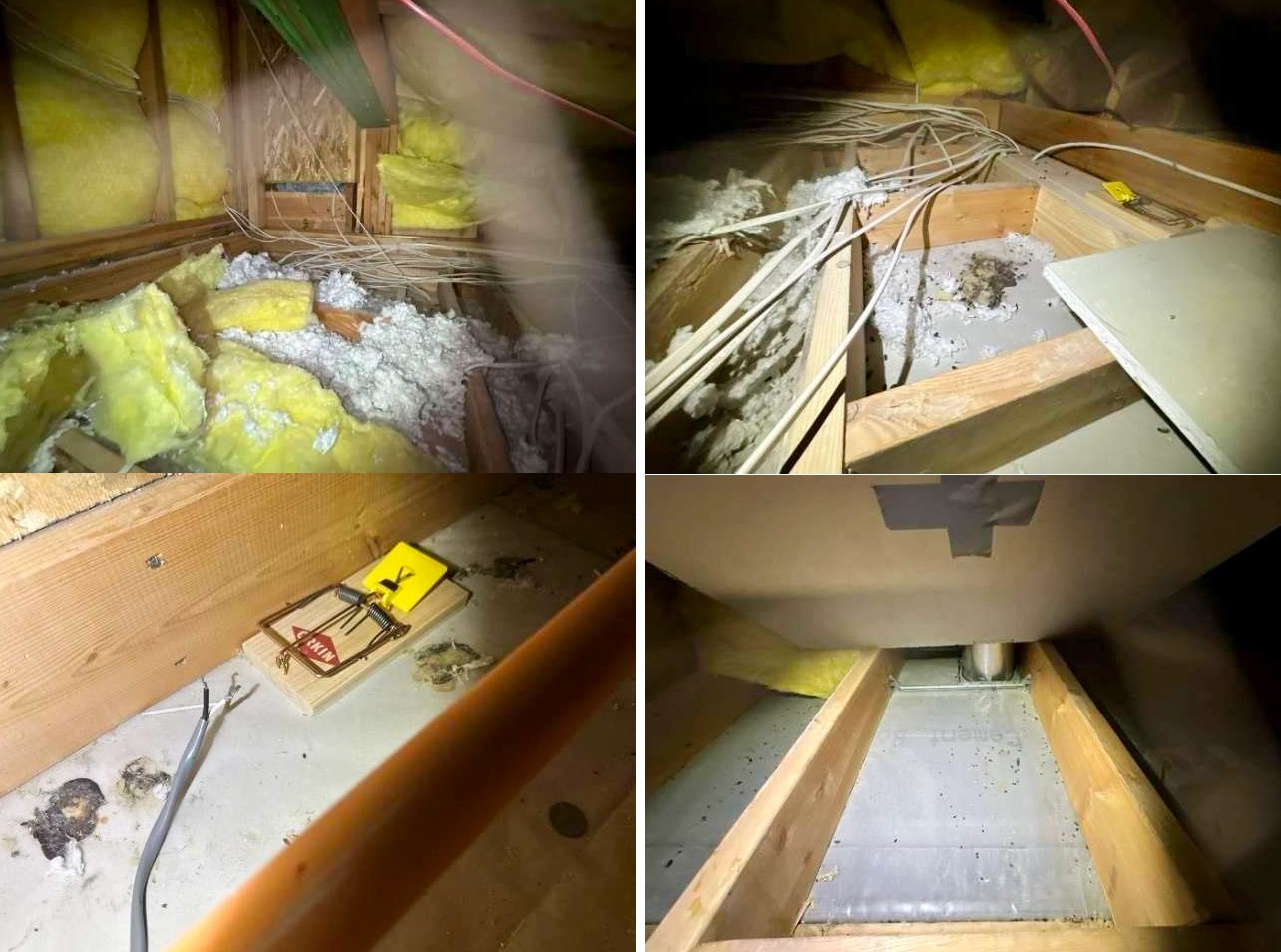
It’s not uncommon to see evidence of multiple types of animals occupying the same structure at different times. Squirrels might have chewed their way in one season. Raccoons may have nested at another point. Bats find their way into tight, dark areas. Pigeons settle into rooflines and soffits. Smaller rodents move in and out as conditions allow.
Each leaves something behind.
Droppings. Nesting debris. Disturbed or contaminated insulation. In some cases, strong, lingering odors. In others, it’s subtle—something you wouldn’t notice unless you were looking closely.
And that’s often the case. These issues don’t announce themselves. They build quietly.
A homeowner might go years without realizing what’s happening above or below their living space.
Until one day, something prompts a closer look.
The Moment That Matters Most
Here’s the part that doesn’t get talked about enough.
The presence of rodents, by itself, is not where the primary risk lies.
The real risk shows up in a very specific moment.
It’s when someone goes into that space and starts cleaning it without understanding what’s there.
Sweeping. Vacuuming. Pulling out insulation. Moving debris around.
All of that can stir up particles that have been sitting undisturbed for months or even years.
That’s the moment when exposure can occur.
Not before.
And this is where good intentions can work against people. Someone wants to take care of their home, clean things up, move forward. But without the right approach, that cleanup process can create more of an issue than the original condition.
Why This Gets Misunderstood
Part of the confusion comes from how these situations are handled.
Animal removal and cleanup are often grouped together in people’s minds, but they are two completely different steps.
Pest control companies focus on removing the animals and preventing them from coming back. That includes trapping, sealing entry points, and addressing the source of the problem. It’s essential work, and without it, nothing else holds.
But once the animals are gone, the job isn’t finished.
What remains still needs to be addressed properly.
Droppings don’t break down overnight. Contaminated materials don’t resolve on their own. Insulation that’s been used for nesting or exposed to waste doesn’t return to its original condition.
And this is where the second half of the process begins.
The Part Most People Don’t See
Cleanup in these situations is not about making things look better. It’s about handling materials in a way that avoids unnecessary exposure and restores the space to a safe condition.
That often involves removing affected insulation, carefully handling contaminated debris, and cleaning surfaces using methods that minimize disturbance rather than increase it.
It’s methodical work.
It takes time. It takes the right equipment. And it takes an understanding of how to approach the space without making the situation worse.
This is especially true in crawl spaces and attics, where ventilation is limited and access is tight. These are not areas where quick fixes tend to work well.
Where We Come In
At SteamMaster, we don’t remove animals. That’s not our role.
We step in after.
Once pest control has done its job and the source has been addressed, we focus on what’s left behind. That includes removing contaminated materials, addressing insulation issues, and cleaning the space in a way that brings it back to a usable condition.
Over the years, we’ve cleaned up after squirrels, raccoons, bats, pigeons, and a wide range of smaller critters. Each situation is different, but the underlying approach is the same.
Handle it carefully. Don’t rush it. Do it in a way that protects both the home and the people living in it.
It’s not glamorous work. Most of it happens in places people rarely see.
But it matters.
Because without it, the problem isn’t really solved. It’s just partially addressed.
A Word on Symptoms and Awareness
For those who want to understand the health side of this, hantavirus symptoms can initially resemble a common flu—fever, fatigue, muscle aches, headaches.
In more serious cases, it can progress to affect breathing.
Symptoms don’t appear immediately. They can show up weeks after exposure, which is another reason why the connection isn’t always obvious.
That said, it’s important to come back to the bigger picture.
Cases are rare.
Most people will never encounter this in their lifetime.
But awareness still matters, because it shapes how situations are handled when they do arise.
Practical Prevention Without Overthinking It
You don’t need to turn your home into a fortress.
But there are a few practical things that make a real difference.
Keeping rodents out in the first place is always the best step. That means paying attention to entry points, sealing gaps, and maintaining areas where animals might try to get in.
Beyond that, it’s about awareness.
If you have a crawl space or attic that hasn’t been inspected in a while, it’s worth taking a look—or having someone take a look for you.
And if there’s ever been known activity, the biggest takeaway is simple.
Avoid disturbing it without understanding what you’re dealing with.
That one decision can make all the difference.
Bringing It Back to Reality
It’s easy for topics like this to swing too far in either direction.
On one side, headlines that make it sound more common than it is.
On the other, a tendency to dismiss it entirely.
The truth is more balanced.
Hantavirus is rare.
Rodent activity in homes is not.
And the way those situations are handled matters.
Most of the time, with the right approach, these issues are resolved without complication.
That’s what we see every day.
Final Thought
Homes, especially in mountain environments, are not sealed boxes. They’re part of a larger ecosystem. Over time, things find their way in. That’s just reality.
The goal isn’t perfection.
It’s awareness, proper handling, and knowing when to bring in the right help.
Because like many things in a home, it’s not about reacting quickly.
It’s about responding correctly.
Do that, and most problems stay exactly what they should be—
manageable.
SteamMaster Restoration and Cleaning
Serving the Central Colorado Rockies
970.827.5555
info@steammaster.com
If you’re dealing with the aftermath of rodent or wildlife activity, we’re here to help you take care of what’s left behind—properly.


